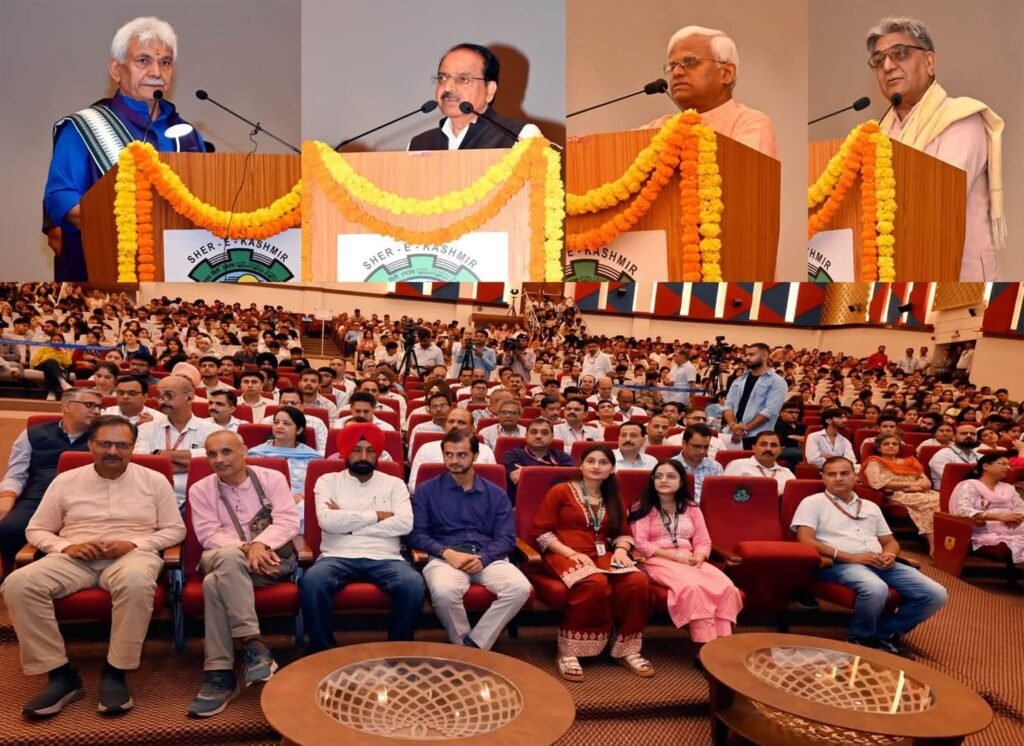
Jammu, September 21, 2026: Millets took centre stage at Sher-e-Kashmir University of Agricultural Sciences and Technology (SKUAST), Jammu, as the university hosted the National Dialogue on “Millets for Health: Building Healthy Ecosystems, Climate-Resilient Agriculture and Sustainable Food Systems.” The event brought together policymakers, scientists, agricultural experts, farmers, entrepreneurs, students and other stakeholders to discuss the growing importance of millets for health, farming and environmental sustainability. The programme was inaugurated by Lieutenant Governor of Jammu & Kashmir, Manoj Sinha, who highlighted the potential of millets to strengthen food security, support farmers and promote climate-resilient agriculture. He particularly emphasised their relevance to Jammu & Kashmir, noting that more than 80% of farmers in the region are small and marginal farmers and often face uncertain weather conditions.
A major highlight of the programme was the participation of Padma Shri Dr. Khadar Vali, widely known as the “Millet Man of India.” His presence brought particular attention to the nutritional, ecological and traditional significance of millet-based food systems. The event also featured Shri Umendra Dutt of Kheti Virasat Mission and experts from agriculture, research and allied sectors. Speaking about the future of food systems, the Lieutenant Governor emphasised that food production must not only focus on quantity but also on nutrition, farmer profitability and environmental sustainability. He highlighted millets such as sorghum, pearl millet, finger millet, kodo millet, little millet, foxtail millet and barnyard millet as crops with long-standing importance in Indian agriculture. Millets are gaining renewed attention because of their nutritional value and their relatively lower water and input requirements. During the event, their dietary fibre and nutrients such as iron, calcium, magnesium and zinc were highlighted, along with their potential role in healthier diets.
The discussion also extended beyond cultivation to the millet economy. The Lieutenant Governor called for greater attention to processing, packaging, branding and value addition, particularly by women’s self-help groups and young entrepreneurs in Jammu & Kashmir. He also highlighted the potential of millet-based enterprises to contribute to rural livelihoods and local economic development. During the programme, several publications were also released, including “A Laboratory Manual on Soil Microbiology,” “Fundamentals of Geographical Information Systems and Remote Sensing,” and “Package of Practices for Minor Millets.” The SKUAST-Jammu dialogue therefore placed millets at the intersection of health, agriculture, climate resilience and sustainable development. For Jammu & Kashmir, renewed interest in these traditional crops could open opportunities not only for diversified farming but also for nutritious food products, entrepreneurship and stronger rural livelihoods.